

The Society hosts a number of online lectures throughout the year. Here is a summary of past events for 2025, with links to the lecture recordings.
Building God’s House: Synagogues, Churches, and Intercommunal Relations in Late Antique Palestine
The webinar featured Professor Zeev Weiss, The Hebrew University of Jerusalem on Wednesday 10 December 2025 at 5.00pm (GMT) on zoom.
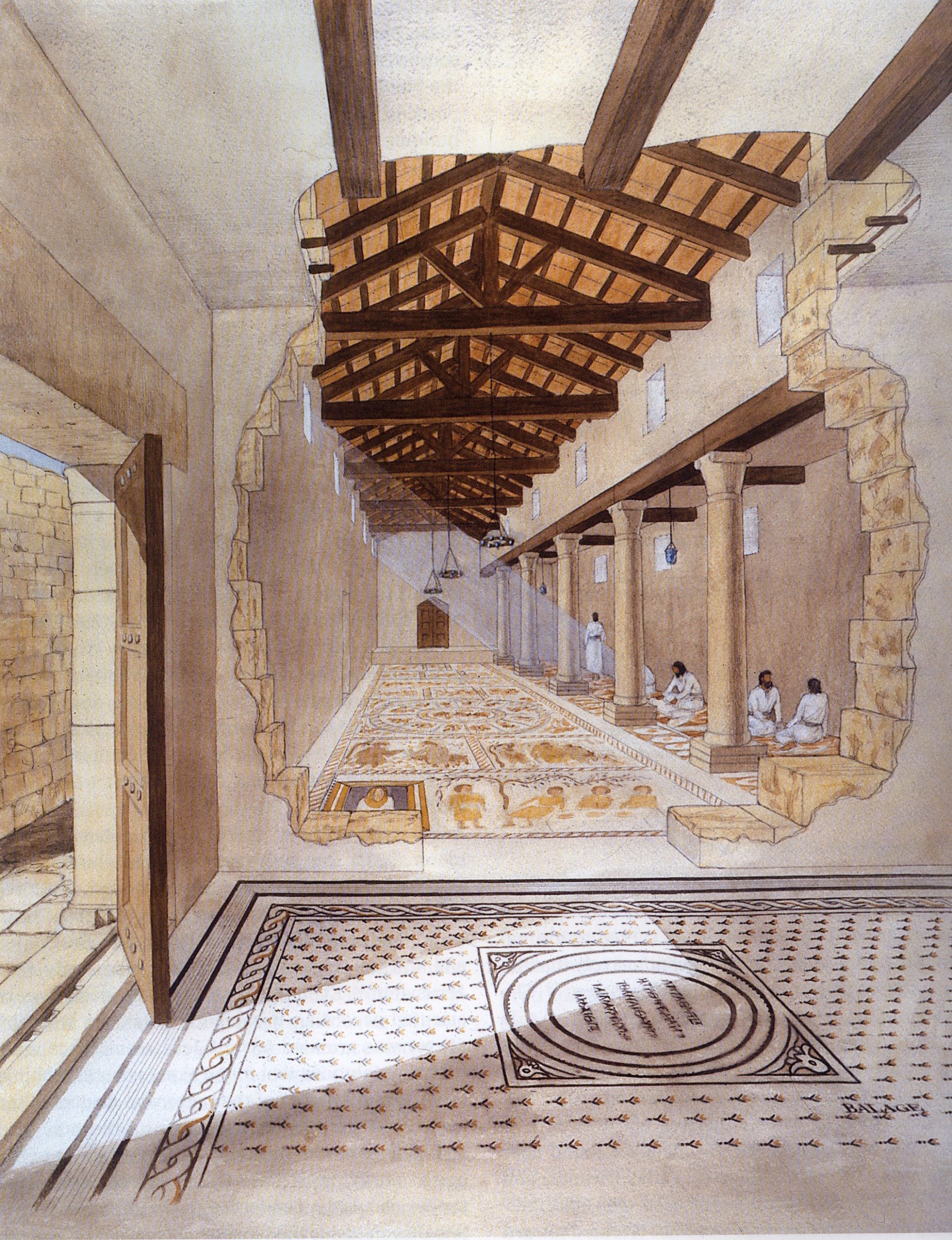
The Christianization of ancient Palestine was a gradual process that began in the fourth century CE and intensified in the centuries thereafter. In fifth- and sixth-century Palestine, Jews and Christians lived side by side in some settlements. This lecture seeks to evaluate the relationship between Jews and Christians—and primarily examine and compare various aspects shared by their two sacred spaces—the synagogue and the church: architectural layout, spatial organization, construction techniques and building materials, artistic decoration, and furnishings. It will be argued that the intercommunal relationship in the daily lives of Jews and Christians was, in fact, closer than we might assume. They were neighbors and, as such, shared common patterns, the minority population adapting itself to the dominant culture.
Zeev Weiss is the Eleazar L. Sukenik Professor of Archaeology at the Institute of
Archaeology of the Hebrew University of Jerusalem. Trained in Classical Archaeology, he specializes in Roman and Late Antique art and architecture in the provinces of Syria-Palestine. His interests lie in various aspects of town-planning, architectural design, mosaic art, synagogues, Jewish art, as well as the evaluation of archaeological finds in light of the socio-cultural behavior of Jewish society and its dialogue with Graeco-Roman and Christian cultures. As director of the Sepphoris excavations on behalf of the Hebrew University of Jerusalem since 1990, his work has contributed greatly to the understanding of the architectural development and character of the city throughout its history. Weiss is a Fulbright scholar and has been a visiting professor at Harvard University, the Institute for Advanced Study at Princeton (IAS), Princeton University, the Institute for the Study of the Ancient World (ISAW) at New York University, and Bard Graduate Center (BGC). He has written over 130 articles, has authored and co-authored five major volumes (listed chronologically: R. Talgam and Z. Weiss, The Mosaics in the House of Dionysos at Sepphoris: Excavated by E. M. Meyers, E. Netzer and C. L. Meyers, Qedem 44 [Jerusalem: Institute of Archaeology, Hebrew University, 2004]; The Sepphoris Synagogue: Deciphering an Ancient Message through Its Archaeological and Socio-Historical Contexts [Jerusalem: Israel Exploration Society, 2005]; Public Spectacles in Roman and Late Antique Palestine [Cambridge, MA: Harvard University Press, 2014]; Sepphoris: A Mosaic of Cultures [Jerusalem: Yad Izhak Ben-Zvi, Hebrew 2021, reprint 2023; transl. into English 2025]; Z. Weiss and S. Miller, Sepphoris 3:The Temple and the Eastern Church in the Lower City, Qedem Reports 15 [Jerusalem: Institute of Archaeology, Hebrew University, 2024]), and has co-edited nine books.
Website: https://zeevweiss.huji.ac.il/
Judean Experience(s) in Mesopotamia
The webinar featured Dr. Laurie Pearce, Senior Lecturer, University of California, Berkeley on Wednesday 12 November 2025 at 5.00pm (GMT) on zoom.
Visual and textual sources from Mesopotamia enrich and provide important counterpoints to the biblical narratives of Israelite and Judean deportations in the wake of Assyrian and Babylonian assaults on those kingdoms. Elaborate reliefs carved on Assyrian palace walls and mundane administrative and economic texts written in Babylonian urban centers and rural locales support a more extensive and nuanced understanding of the Israelite and Judean experiences in Mesopotamia. This richly illustrated talk considers the deportees in the multicultural, multilingual fabric of Mesopotamian life in the late first millennium BCE, and sketches the emerging picture of Judean individuals and families, actively engaged in diverse social and economic activities.
Laurie Pearce, a senior lecturer in Akkadian in the Department of Middle Eastern Languages and Cultures at the University of California, Berkeley, is a specialist in Mesopotamian social and economic history of the late first millennium BCE. She earned her PhD in Assyriology in 1982 at Yale University. She is the co-author, with Cornelia Wunsch, of Documents of Judean Exiles and West Semites in Babylonia in the Collection of David Sofer. CUSAS 28. (Bethesda: CDL Press, 2014), which includes the earliest documentation of Judean exiles in Babylonia following Nebuchadnezzar’s destruction of the Temple in 587/6 BCE. Her publications on the Judean experiences in Babylonia have appeared in scholarly and public facing vehicles. Dr. Pearce is actively engaged in digital humanities research and scholarship, as corpus curator of Hellenistic Babylonia: Texts, Images and Names (oracc.org/hbtin), and is currently developing building an online site of cuneiform sources that document Foreigners in Babylonia in the First Millennium BCE. As a Fulbright scholar (Spring 2016), she taught at the Hebrew University, Jerusalem.
Mapping the Jews of Ancient Egypt: From the Hellenistic Period to the Arab Conquest
The webinar featured Meron M. Piotrkowski, Associate Professor of Ancient Jewish History at the University of Oxford on Wednesday 22 October 2025 at 5.00pm (BST) on zoom.
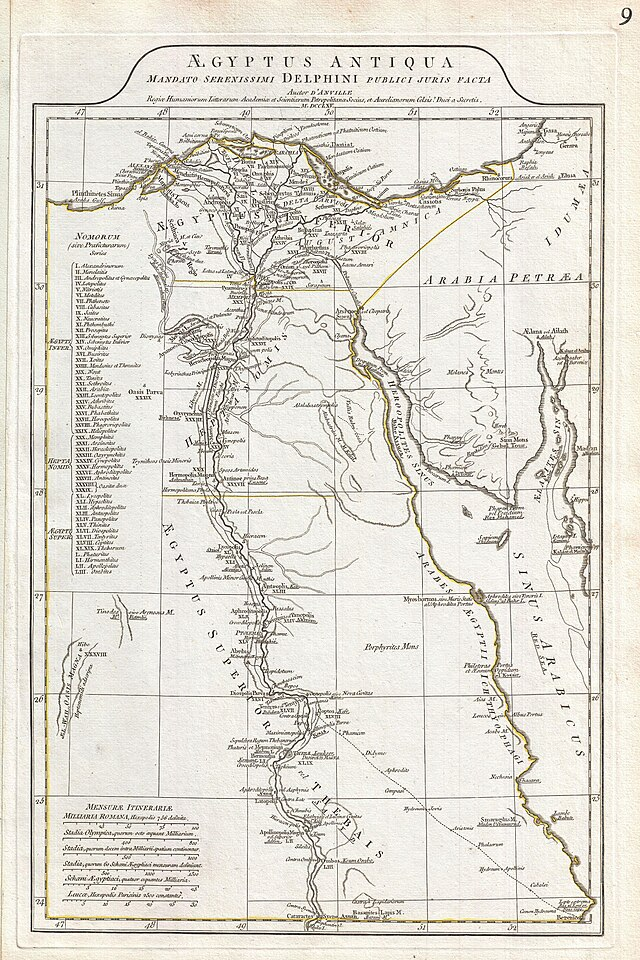
This paper presents IM–JEDI, an interactive map of the Jews of Egypt based on documentary (papyri) and epigraphic evidence, tracing Jewish settlement and migration from the Ptolemaic through the Byzantine periods. By visualizing geographical shifts, continuity, and disappearance of communities, the project highlights urban and rural distribution, the impact of the Diaspora Revolt (115–117 CE), and the transformation of Egyptian Jewry in its aftermath. Case studies from the Fayum, Antinoopolis, Oxyrhynchus, and Upper Egypt (Edfu) illustrate patterns of resilience, decline, and cultural adaptation. The map demonstrates how digital tools can illuminate Jewish history in Egypt across centuries of political and social change.
Meron M. Piotrkowski (Ph.D., Hebrew University of Jerusalem, 2015) is Associate Professor of Ancient Jewish History at the University of Oxford. A historian of antiquity, he specializes in the Second Temple period with a particular focus on the Jewish Diaspora in Egypt. He is the author of Priests in Exile: The History of the Temple of Onias and Its Community in the Hellenistic Period (Berlin and Boston: Walter de Gruyter, 2019) and a contributor to the new Corpus Papyrorum Judaicarum (vols. IV–VII, eds. N. Hacham and T. Ilan). His current book project focuses on the History of the Jewish community of Oxyrhynchus in Egypt during the Hellenistic, Roman, and Byzantine periods.
Excavations of Crusader Akko
The webinar featured Dr. Danny Syon, Adjunct Israel Antiquities Authority on Thursday 18 September 2025 at 5.00pm (BST) on zoom.
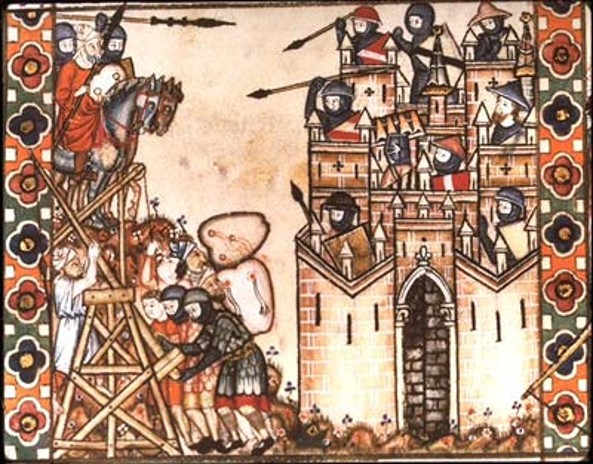
In the 13th century, Akko was the capital of the second Crusader Kingdom of Jerusalem and one of the most important ports along the eastern Mediterranean. Its fall in 1291 to the Mamluk army signaled the end of the Crusader period in the Holy Land. After it lay desolate for almost 450 years, Akko was revived in the mid-18th century as an Ottoman city that exists to this day. Massive excavations from 1991 to 2010 uncovered the imposing headquarters of the Hospitaller order, a domestic neighborhood that also included cottage industries, and various other remains. The recent appearance of the final publication of these excavations is an opportunity to revisit the excavations and the impressive finds.
Before joining the Israel Antiquities Authority (IAA), Dr. Danny Syon excavated for 14 seasons at Gamla alongside Shmarya Gutmann and 14 seasons as a diver at the Caesarea harbor excavations of the University of Haifa. Within the IAA, he directed over 50 excavations of various scale, including at Gamla, Akko and Bet Shean. From 2007 until his retirement in 2021 he served as head of the Scientific Assessment Branch. Danny specializes in numismatics and is the co-editor of the Israel Numismatic Research journal.
Reminiscences of the Masada dig, 1963-5: Yigael Yadin and the British Connection
The webinar featured Tessa Rajak is Professor of Ancient History Emerita at the University of Reading on Thursday 17 July 2025 at 5.00pm (BST) on zoom.

2025 marks sixty years since the conclusion of Yigael Yadin’s two extraordinary seasons of digs at Masada. The excavation of this spectacular fortress on the Dead Sea remains the most celebrated archaeological accomplishment of the modern State of Israel. Masada was the last stronghold to fall to the Romans, three or four years after the destruction of Jerusalem and of the Temple, in the summer of 70 CE. Amidst King Herod’s pleasure palaces, storehouses and walls, some 960 rebels and their families held out, apparently killing themselves at the end to avoid capture and enslavement. The story, as dramatized by the historian Josephus, is enshrined in Jewish collective memory, an inspiration (albeit ambiguous) to Jews in desperate situations, from mediaeval martyrs to the Shoah. The excavations revealed both Herod’s brilliant buildings and stirring remnants of the later siege and the defenders. The lecture will draw on personal reminiscences of the dig, as well as highlighting the large British contribution. We shall discover how the unexpected British involvement was created during Yadin’s 1961 stay in London, his connections in the Anglo-Jewish community and his friendship with David Astor, editor of the Observer newspaper. Reflections on the contrast between Israel’s international image then and now will inevitably arise.
Tessa Rajak is Professor of Ancient History Emerita at the University of Reading, Senior Research Fellow of Somerville College, Oxford and Senior Associate of the Oxford Centre for Hebrew and Jewish Studies. She has been a visiting professor at Yale, the Humboldt University, Berlin, and at Macquarie University, Sydney, and she has held research fellowships at the Institute of Advanced Study, Princeton, at the Hebrew University in Jerusalem, and at Tel Aviv University among others. The books she has authored include Translation and Survival: The Greek Bible of the Ancient Jewish Diaspora; The Jewish Dialogue with Greece and Rome and Josephus: The Historian and His Society. She is now completing a book on the historian Josephus in English culture and an edition of the 4th Book of Maccabees. She is a Fellow of the Society of Antiquaries of London. She has been editor of the Journal of Jewish Studies, and between 2015 and 2021 she chaired the Anglo-Israel Archaeological Society.
“Tel Azekah after Twelve Seasons of Excavation: From a Canaanite City to a Judahite Fort and a Byzantine Church”
The webinar featured Oded Lipschits, Professor at Tel Aviv University, Israel on Thursday 5 June 2025 at 5.00pm (BST) on zoom.
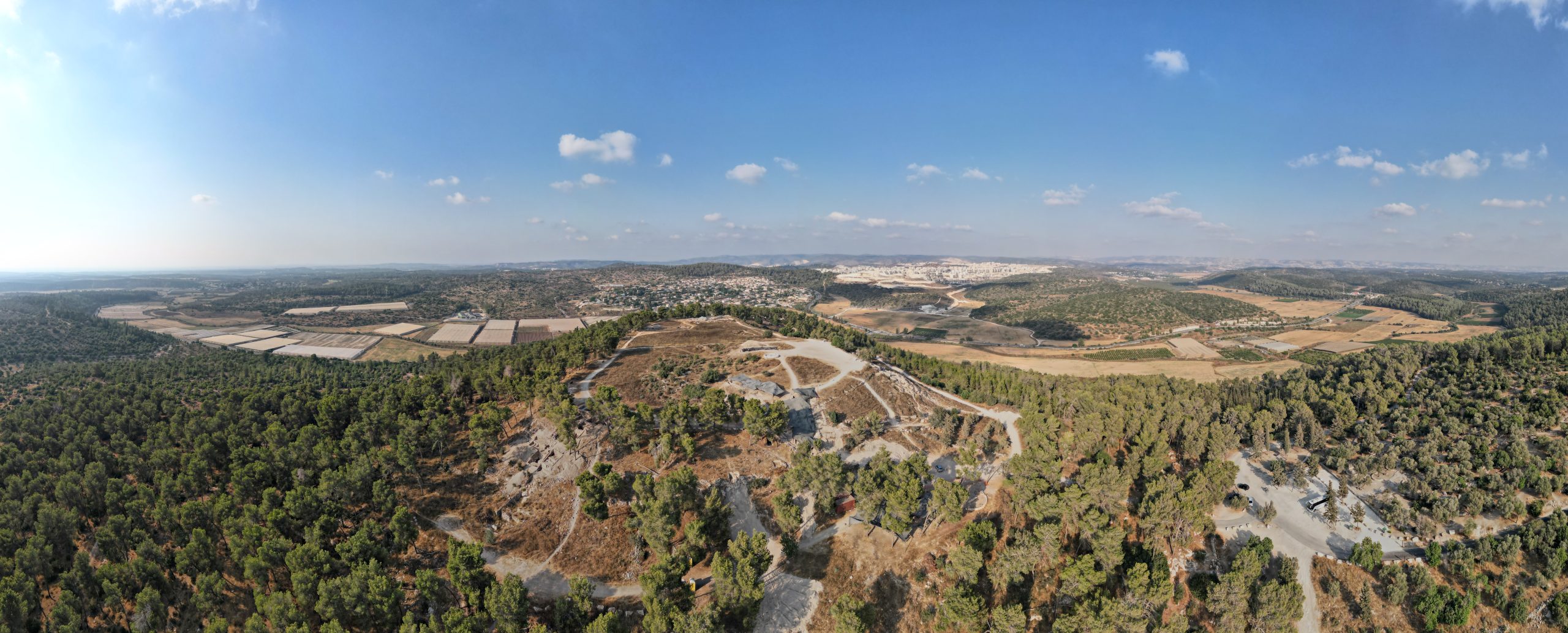
Tel Azekah never ceases to amaze!
The excavations that have been ongoing at the site since 2012 have revealed more than twenty phases of settlement that began as early as 5,000 years ago, in the Early Bronze Age – and through the Middle and Late Bronze Age, the Iron Age and the destruction left by the Assyrians and Babylonians, the Persian and Hellenistic periods, the Roman and Byzantine periods, and up to the early Muslim period.
The excavations reveal Tel Azekah as a central and important site in the seam between the highland and the lowland. Its name changed between the different main periods: “Moreshet Gat” in its beginnings, the house of the prophet Micah the Moresthite, “Azekah” with the takeover of the Kingdom of Judah, and “Beit Zechariah” in the Byzantine period, which was preserved in the name of the site until today (Tel Zakariah) and the nearby settlement, Zakariah / Zechariah.
Oded Lipschits is a Professor of Jewish History in the Biblical Period in the Department of Archeology and Ancient Near Eastern Cultures of Tel Aviv University. Laureate of the EMET Prize in Archaeology (considered as “the Israeli Nobel Prize”), he has authored hundreds of books and articles in archaeology, history and biblical studies. Prof. Lipschits was the director of the excavations at Ramat Raḥel (2004–2010) and now directs the excavations at Tel Azekah (since 2010) and the temple at Tel Moza (since 2018).
“Life in Building 101 at Tel ‘Eton: From “Boys and Girls Playing” to “Old Men and Old Women Sitting”
The webinar featured Avraham Faust, Professor of Archaeology at the Department of General History, Bar-Ilan University on Tuesday 27 May 2025 at 6.00pm (BST) on zoom.
Building 101 at Tel ‘Eton (located in the eastern Shephelah, Israel) is a large longitudinal four-space (four-room) house that was excavated in its entirety over the course of 10 seasons, providing us with uniquely detailed information, and enabling us to reconstruct all aspects of domestic life. The building was erected in the 10th century and was destroyed in the late 8th century during an Assyrian military campaign, most likely at the time of Sargon II. About 200 complete vessels, 500 artifacts, as well as numerous other finds were unearthed within the massive destruction layer. The detailed information suggests that the house was inhabited by an extended family of at least three generations, and allows us to reconstruct the way the various rooms functioned, for example for storage, food preparation, and sleeping. The data also enables us to identify the activities of children, the spaces occupied by the elders (the “father” and “mother” of the household), how purity was maintained, and more.
Avraham Faust is Prof. of archaeology at the Department of General History, Bar-Ilan University. He is the director of the Tel ‘Eton Expedition, the “The National Knowledge Center on the History and Heritage of Jerusalem and its Environs”, and a survey in the Negev Highlands. He was a visiting professor at Harvard and Chicago, a visiting scholar/fellow in Oxford and Cambridge, and is a research fellow at the Zinman Institute of Archaeology (Haifa University) and a corresponding member of the Archaeological Institute of America. His ca. 250 publications include Israel’s Ethnogenesis (2006), which won three book awards, The Archaeology of Israelite Society (2012), Judah in the Neo-Babylonian Period (2012), The Settlement History of Ancient Israel (Hebrew, 2015, with Zeev Safrai), The Neo-Assyrian Empire in the Southwest (2021), and (with Zev Farber), The Bible’s First Kings (2025).
Tamar on the Southern Boundary of Ezekiel’s New Land of Israel
The webinar featured Yigal Levin, Associate Professor at Bar-Ilan University, Israel on Thursday 24 April at 5pm (GMT) Online, via Zoom.

In the second half of chapter 47, Ezekiel traces out the boundaries of the future Land of Israel as he envisions it. As is widely recognized, this boundary is based on the Priestly boundaries of the land as described in Num. 34:1-12, with various “adjustments” in order to make it relevant to Ezekiel’s contemporary audience. One of these is the replacement of Numbers’ “by the border of Edom” with the toponym “Tamar”. Tamar, as a place-name, is quite obscure. It appears, besides here and in the repetition of this boundary in Ezek. 48:28, in 1 Kings 9:18 (where the parallel text in Chronicles reads “Tadmor”). A “Hazazon-tamar” is mentioned in Gen. 14:7 and in 2 Chr. 20:2. This lecture will attempt to explain why Ezekiel chose to delete Edom, why he chose the obscure Tamar in its stead, and what we can learn from this on the reality behind his “updating” of the boundaries of the land.
Yigal Levin is an associate professor in the Israel and Golda Koschitzky Department of Jewish History and Contemporary Jewry at Bar-Ilan University, Israel. He also teaches at Jerusalem University College. He researches and teaches the history of Israel in the Biblical and Early Second Temple Period, and is especially interested in ancient society, historical geography and in the interface between historical documentation and archaeological evidence. His long-term project is a three-volume commentary on the book of Chronicles, published by Bloomsbury T&T Clark. The first volume, The Chronicles of the Kings of Judah, was published in 2017, the second, The Chronicles of David and Solomon, is presently in production at the publisher’s and the third, The Chronicles of All Israel, is expected around 2029.
Mary of Nazareth: A non-elite Jewish life
The lecture was delivered by Professor Helen Bond, Professor of Christian Origins at the University of Edinburgh.
Thursday 20 March 2025 at 5pm (GMT) Online, via Zoom.
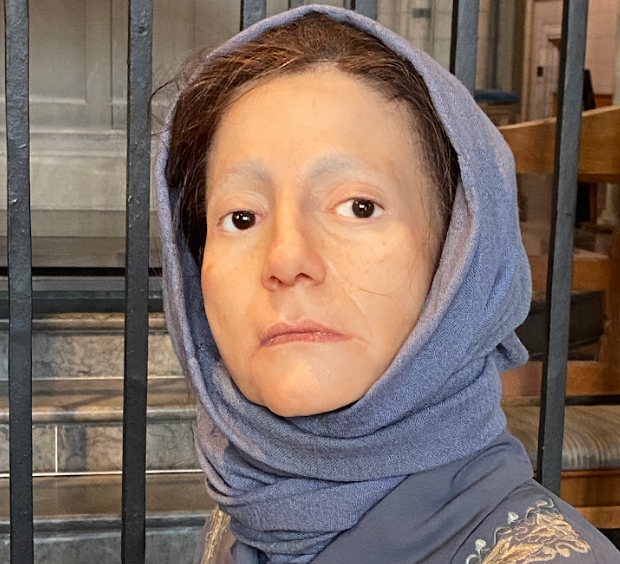
Image courtesy of Prof. Helen Bond
As the most famous woman who ever lived, Mary’s story has been retold countless times in Christian art, iconography, liturgy, and theology. Yet surprisingly little has been written about the historical woman behind this outpouring of devotion. Some might think that the quest for the “historical Mary” is pointless when separated from her theological legacy, but I argue in this paper that her story deserves to be told. Drawing on archaeology and snippets of evidence from the New Testament, it is just possible to catch a glimpse of the life of a non-elite Jewish woman from first century Galilee, a second wife who prided herself on Davidic lineage, and a mother at odds with her son.
A Wise Woman and a Bearded Male: Excavations at Tel Abel Beth Maacah in Northern Israel – DR. NAVA PANITZ-COHEN (Institute of Archaeology, the Hebrew University of Jerusalem)
16 January 2025 (Online, via Zoom)

Tel Abel Beth Maacah in the Hula Valley with the Golan Heights in the background
Tel Abel Beth Maacah is the northernmost site in Israel, sitting astride the modern border between Lebanon and Israel that, in fact, mirrors the interface between the ancient kingdoms of Israel, Aram Damascus, and the Phoenicians in the Iron Age. Excavations and surveys at the site have been conducted since 2012 by The Hebrew University of Jerusalem and Azusa Pacific University in Los Angeles. This lecture will present the rich remains from the second and first half of the first millennia BCE, the Middle Bronze to the Iron Age II, that afford data enabling us to address long-standing questions concerning the organization of Canaanite city-states and the extent of the Israelite kingdom and the relations with its neighbors in this important border region.
Dr. Nava Panitz-Cohen is a researcher and lecturer at the Institute of Archaeology of The Hebrew University of Jerusalem and is currently co-director of the excavations at Tel Abel Beth-Maacah. She has excavated at many sites, including Tel Batash, Tel Rehov, and Tel Beth-Shean with Prof. Amihai Mazar, and participated in the publication of these projects. Her main research interest focuses on how ceramics inform on aspects of ancient society and culture.
Joint Lecture with British Friends of The Hebrew University.
Debates in the Dust: Seventy Years After the First Dig at Hazor and the Shaping of Biblical Archaeology
Dr Igor Kreimerman, Senior Lecturer at the Department of Archaeology and Ancient Near Eastern Studies at the Hebrew University of Jerusalem.
26 February 2025 (Online, via Zoom)
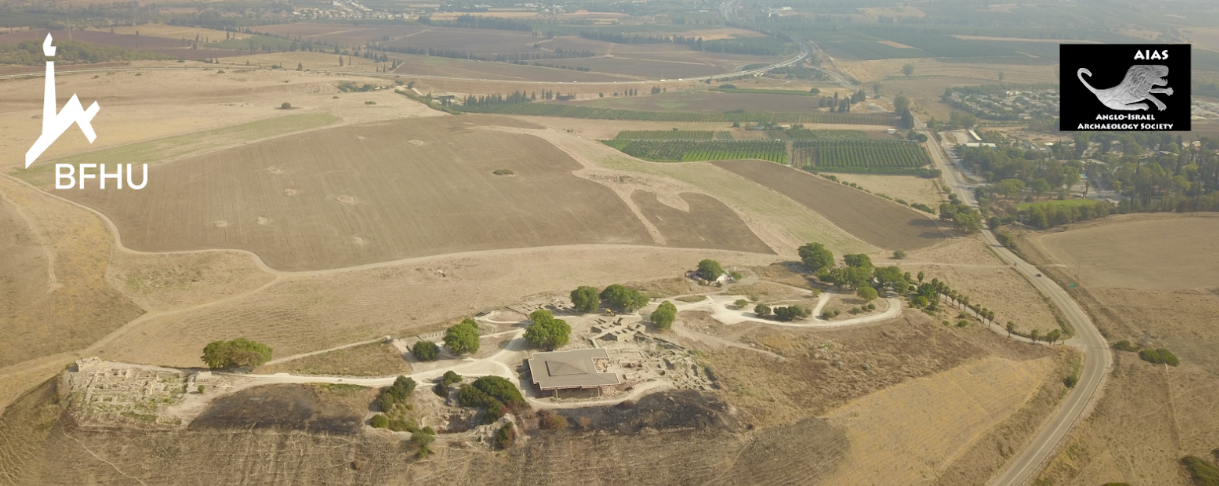
Dr Igor Kreimerman is a Senior Lecturer at the Department of Archaeology and Ancient Near Eastern Studies at the Hebrew University of Jerusalem. His research combines the use of geoarchaeology, experimental archaeology and traditional archaeological methods for the study of formation processes, especially construction and destruction, in the Bronze and Iron Age Levant.
Areas of Interest: Archaeology of the Bronze Age and Iron Age in the Land of Israel, ancient construction materials and techniques, architecture, urban planning, destruction by fire, the seam between archaeology and text-based disciplines
Projects: Director of the Tel Hazor Excavations Project, scientific consultant in the Tell Beir Mirsim Excavations.