

The Society hosts a number of online lectures throughout the year. Here is a summary of past events for 2026, with links to the lecture recordings.
British Museum | Ancient Israel and Judah in the British Museum
Dr Paul Collins, a Trustee of AIAS and Keeper of the Department of the Middle East at the British Museum, delivered talk exploring the ancient history of Israel and Judah on Thursday 11 June 2026, 15.30–16.30 (BST)
Drawing on his extensive expertise, and following his recent delivery of the first AIAS online course, Dr Collins will examine the historical and archaeological record of the region, offering rich insights into its cultures and societies.
Please note this lecture was not recorded.
For the Freedom of Zion: The Great Revolt of Jews against Romans, 66-74 CE
This webinar featured Professor Guy Rogers, Wellesley College on Thursday 18 June, 5pm (BST) on Zoom.
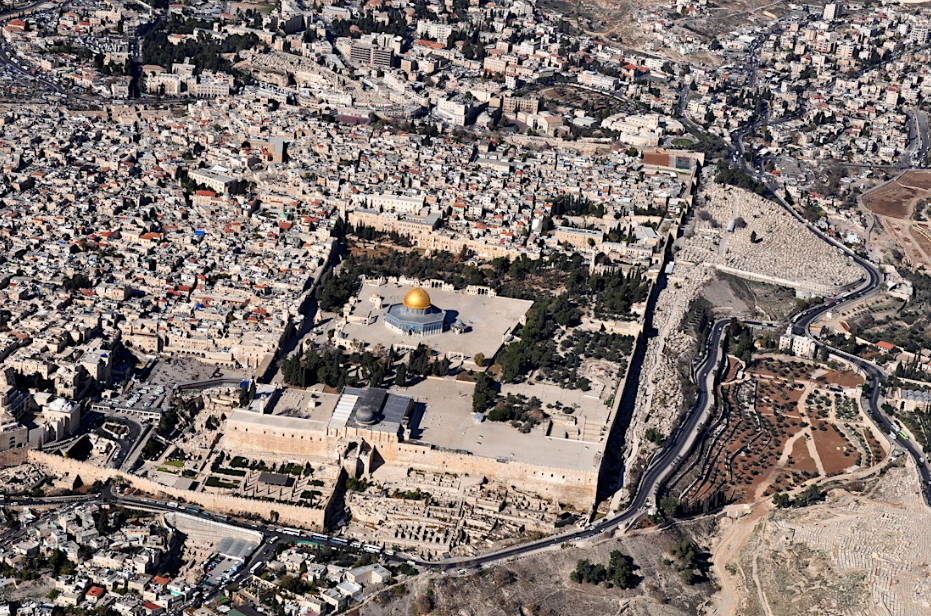
The war of Jews against Romans from 66 to 74 CE was the greatest revolt in the history of the early Roman empire. Fought with great ferocity by both sides the war led to the destruction of the Temple in Jerusalem and the cessation of the sacrificial cult of the Jews.
In this lecture Guy Rogers will discuss the causes of the revolt, its course, and historical effects, which continue to reverberate around the world to this day.
Professor Rogers will contend that while the Romans won the war, they lost the peace. When the Romans destroyed the Jerusalem temple, they believed that they had defeated the God of Israel and eliminated Jews as a strategic threat to their rule. Instead, they ensured the Jews’ victory. After their defeat Jews turned to the written words of their God. Following those words ultimately led to the Jews’ recovery of freedom in the promised land.
Guy Rogers studied Greek, Roman, and Ancient Near History at University College London with Sir Fergus Millar, John North, Tim Cornell, and Amélie Kuhrt. He earned his Ph.D. in Classics from Princeton University in 1986. His first book The Sacred Identity of Ephesos won the Routledge Ancient History in 1989.
He was a Visiting Fellow of All Souls College in 1997 and in 2003 received the Perennial Wisdom Medal of the Monuments Conservancy of New York City for his contributions to the study of humanities.
His latest book, For the Freedom of Zion: The Great Revolt of Jews against Romans, 66-74 CE was published by Yale University Press in 2022 and was named an Outstanding Academic Title by Choice.
He has taught Classics and Ancient History at Wellesley College in Wellesley Massachusetts for forty-one years.
YouTube Link – to follow
The Wadi Murabba’at Ptolemaic coin hoard and the troubles in Jerusalem in 169 BCE
This webinar featured Catharine Lorber, an independent researcher and honorary Life Fellow of the American Numismatic Society on Thursday 14 May, 5pm (BST) on Zoom.
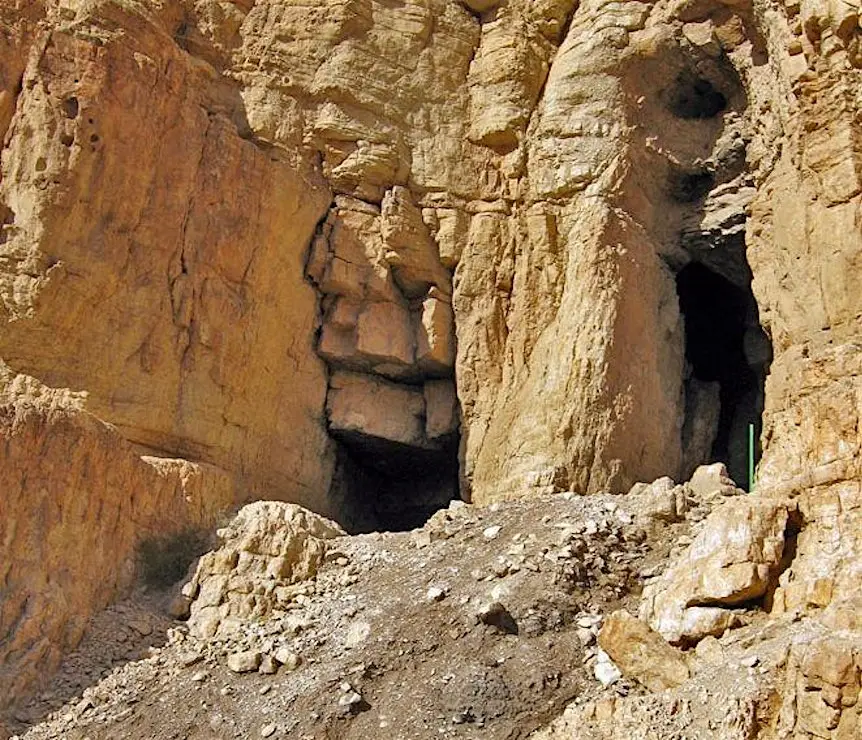
The lecture will describe the peculiarities of monetary circulation in the Southern Levant in the first decades after the Seleucid conquest, the types of coinage attested in Judah in this period, the contents of a hoard of Ptolemaic silver coins found in IAA excavations in a cave in the Eastern Desert, and its relation to the troubles in Jerusalem under the reign of Antiochus IV.
Catharine Lorber is an independent researcher and honorary Life Fellow of the American Numismatic Society.
She has a BA in Greek from UCLA and worked most of her career as a cataloguer for commercial numismatic firms. She has published dozens of scholarly papers and a few books.
Catharine is a co-author (with Arthur Houghton and Oliver Hoover) of Seleucid Coins: A Comprehensive Catalogue(2002, 2008) and sole author of Coins of the Ptolemaic Empire(2018, 2025).
Ptolemaic coinage is her primary specialty, and she holds an interest in Thessalian coinage, especially that of Larissa.
Scriptural Vitality and the Shaping of Jewish Tradition
This webinar featured Hindy Najman, Oriel and Laing Professor of the Interpretation of Holy Scripture and a fellow at Oriel College, University of Oxford. This lecture is organised joint with the Parkes Institute at the University of Southampton on Tuesday 3 March 2026, 6pm (GMT) on Zoom.
This talk focuses on rethinking methodological presuppositions that are central to the field of biblical studies. A central theme of the talk is the importance and centrality of the Hellenistic period for understanding the vitality of Judaism. In contrast to standard views, I claim that this period is one of the most important and formative periods for the history of Judaism. The language that I employ is that of vitality. This is intended to signal the transformative and life-giving dynamic of a Judaism that continued to configure itself and its texts over time and in the face of great loss and the threat of destruction. This dynamic and resilient nature is exemplified by a whole host of texts across the Second Temple period. Judaism is framed by a past and a future which are textual. Through the convergence of cultures in the Hellenistic period, Scriptural traditions create patterns for the shaping of law, interpretation, and new conceptual innovation.
Hindy Najman (MA and PhD Harvard, NELC 1998) is the Oriel and Laing Professor of the Interpretation of Holy Scripture and a fellow at Oriel College. She is the director and founder of the Centre for the Study of the Bible in Oriel College. In the University of Oxford, she is a member of the faculty of Theology and Religion, Asian and Middle Eastern Studies, and member of the Sub-faculty Classics, and a member of the Oxford Centre for Hebrew and Jewish Studies.
From Genesis to the Four Kingdoms: World History in the Huqoq Mosaic
This webinar featured Rina Talgam, Hebrew University of Jerusalem. This lecture is organised joint with Oxford University on Thursday 5 February 2026, 10am (GMT)
Please note that this lecture was not recorded.
When Humans Met Neanderthals: The Discovery from Tinshemet Cave, Israel
The webinar featured Prof. Yossi Zaidner, The Hebrew University of Jerusalem. This lecture is organised joint with the British Friends of Hebrew University on Wednesday 4 Feb 2026 at 5.00pm (GMT) on zoom.
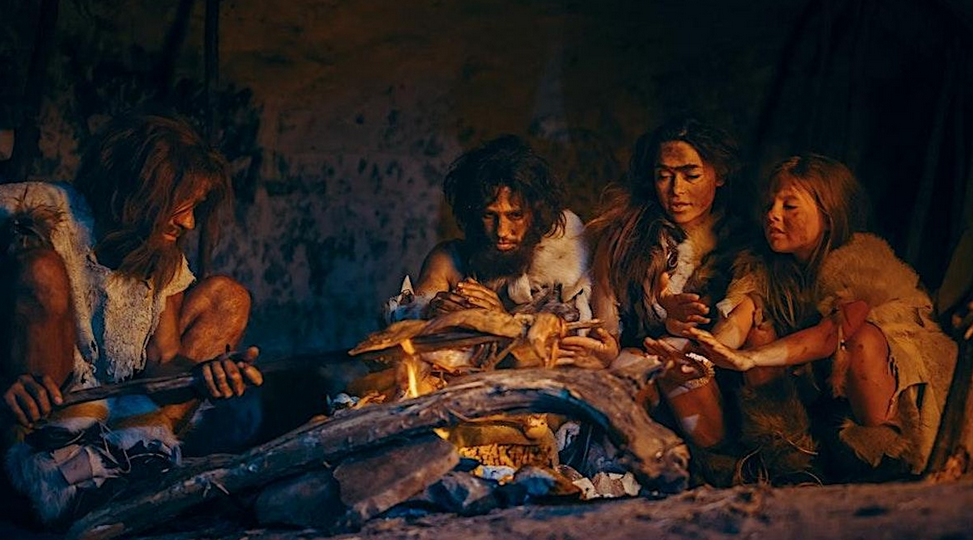
The first-ever published research on Tinshemet Cave reveals that Neanderthals and Homo sapiens in the mid-Middle Paleolithic Levant not only coexisted but actively interacted, sharing technology, lifestyles, and burial customs. These interactions fostered cultural exchange, social complexity, and behavioural innovations, such as formal burial practices and the symbolic use of ochre for decoration. The findings suggest that human connections, rather than isolation, were key drivers of technological and cultural advancements, highlighting the Levant as a crucial crossroads in early human history.
Editing Ancient Manuals of Divination: How, and Why
The webinar featured Prof. Gideon Bohak, Tel Aviv University. This lecture is organised jointly with Oxford University on Thursday 29 January 2026, 10am (GMT).
Please note this lecture was not recorded.
Herod’s Many Faces as Reflected in His Art and Architecture
The webinar featured Orit Peleg-Barkat, head of the Classical Archaeology sub-department at the Institute of Archaeology at the Hebrew University of Jerusalem on Tuesday 13 January 2026 at 5.00pm (GMT) on zoom.
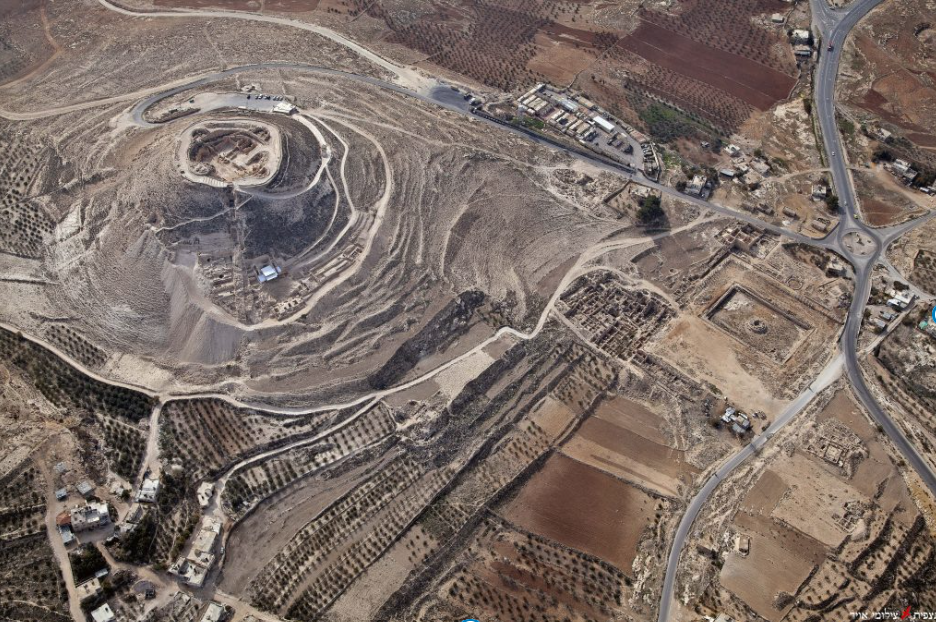
Amongst the client kings of the early Empire, Herod is clearly the best known to scholarship, thanks to the detailed historical testimony of Flavius Josephus and the rich and nicely preserved archaeological remains of his immense construction projects. Scholarly debate has been fervently going in past decades concerning the dominance of Hellenistic and Roman influences on his rule and architecture, in an attempt to decipher the riddle of his enigmatic character.
In recent years, ongoing archaeological excavations at Herodium led by the Hebrew University exposed a mausoleum, identified by the excavators as the King’s final resting place. Also exposed was a small theater with a beautifully decorated royal box, including pictures with vistas and human figures, unprecedented in Herod’s other construction projects, that generally conform to the Jewish norm of abstention from depicting human figures. These two finds, along with other new discoveries at Herodium have led to a drastic change in our understanding of the site, named after Herod, and clearly one of his most important endeavors.
Another important endeavor of the King, if not the most important, was his reconstruction of the Temple in Jerusalem and the enlargement of the Temple mount platform that allowed him to construct a large basilica on its southern side, the stoa basileios. Old excavations by the Hebrew University at the foot of the southern wall, where architectural pieces from this structure were collected, are only now being published, shedding light on Herod’s Royal Stoa and the architectural decoration of the Herodian Temple Mount.
The talk will discuss the implications of these new findings on our perception of Herod’s architecture and the multiple identities and influences it reflects.
Bio: Dr. Orit Peleg-Barkat is a Classical archaeologist specializing in Hellenistic and Roman art and architecture of the southern Levant (4th c. BCE – 4th c. CE). She is currently the head of the Classical Archaeology sub-department at the Institute of Archaeology at the Hebrew University of Jerusalem and runs excavations and field work at several sites, including the Jewish Byzantine-period village at En Gedi by the Dead Sea, a Roman temple and a Jewish pyramidal funerary monument and hideout complex at Horvat Midras in the Judean Foothills as well as a monumental early Roman Structure south of the Temple Mount in the Old City of Jerusalem. Her research and fieldwork projects are funded by grants from the Israel Science Fund, the Social Sciences and Humanities Research Council of Canada, the Fritz Thyssen Foundation, etc.